Download Hearthstone APK 35.4.241958 Free for Android
Blizzard Entertainment, Inc. APK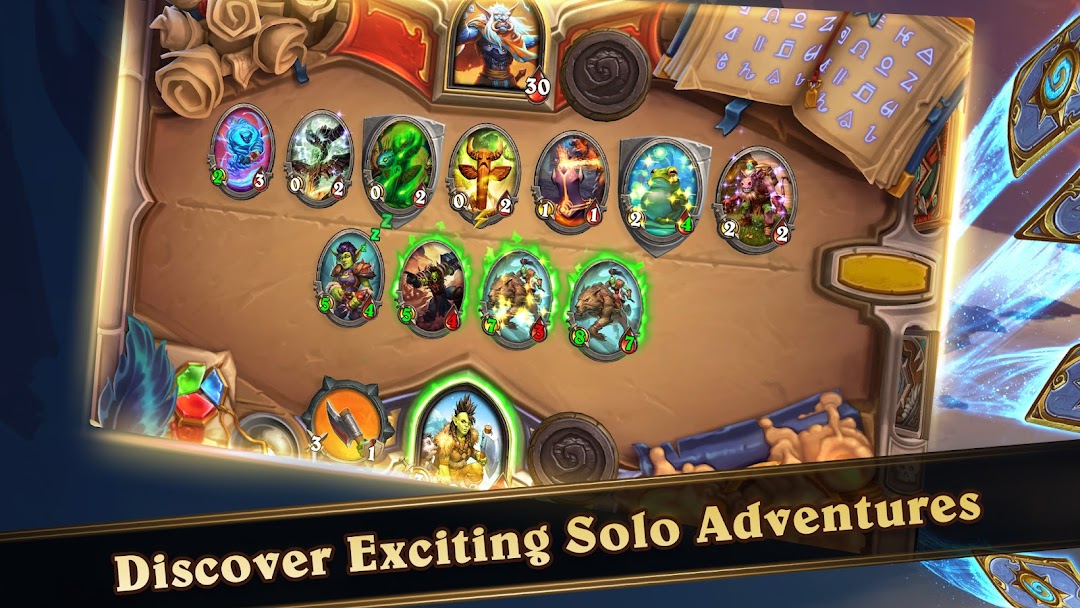
| Tên | Hearthstone |
|---|---|
| Nhà phát hành | Blizzard Entertainment, Inc. |
| Phiên bản | 35.4.241958 |
| Kích thước | 451MB |
| Yêu cầu | Android 9.0 |
| Google Play | Google Play ↗ |
| Danh mục | Card |
| Lượt tải | 3 |
| Giá | MIỄN PHÍ |
| Đánh giá |
★
★
★
★
★
0/5
(0)
|
| Tác giả | |
| Cập nhật |
Hearthstone packs 11 Warcraft classes, thousands of collectible cards, and five live game modes into one free Android card game from Blizzard.
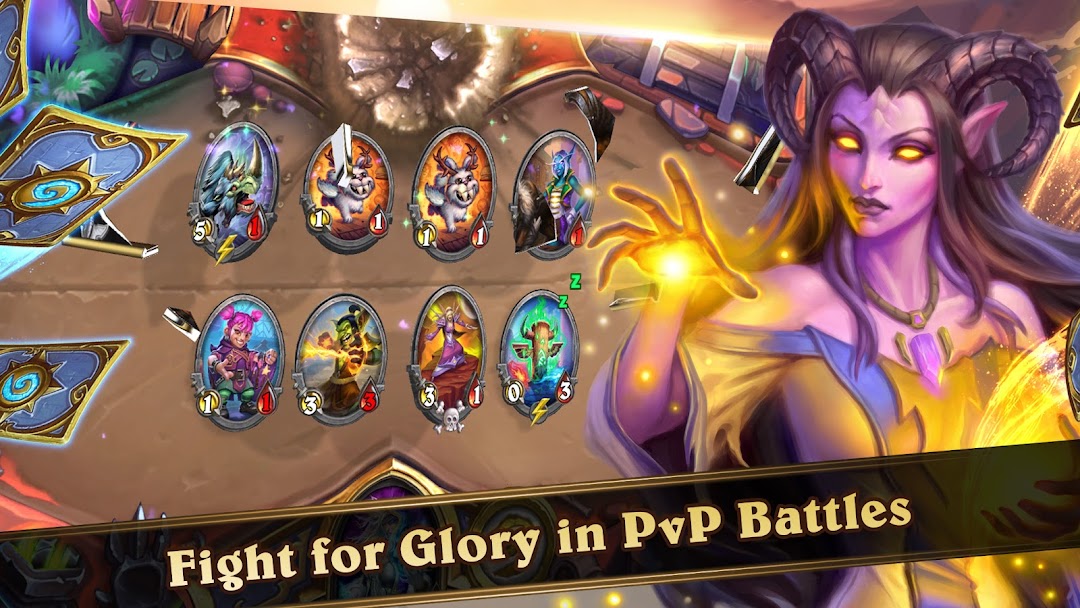
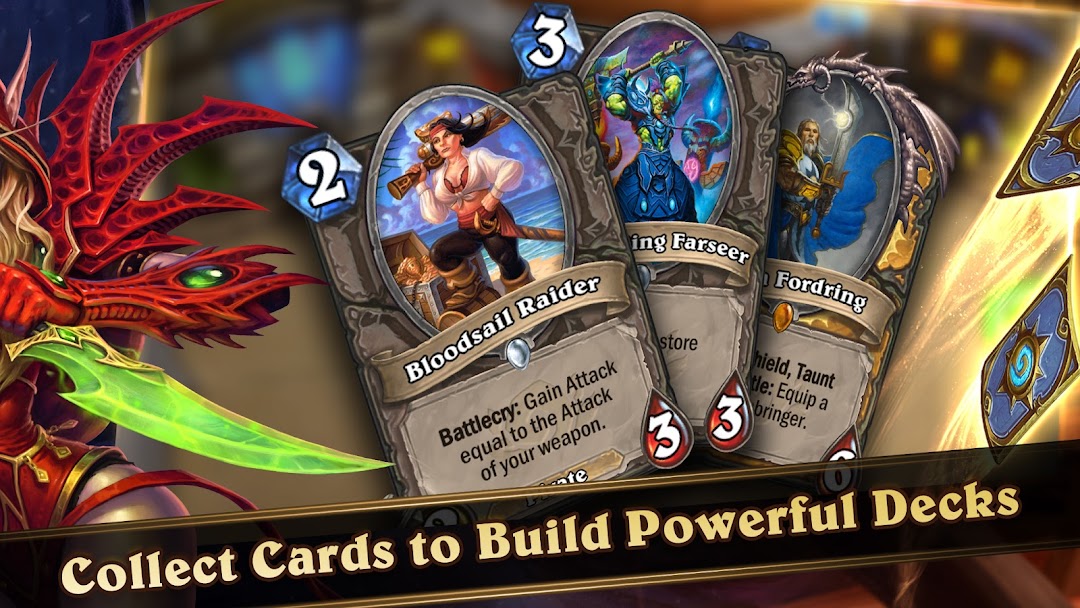
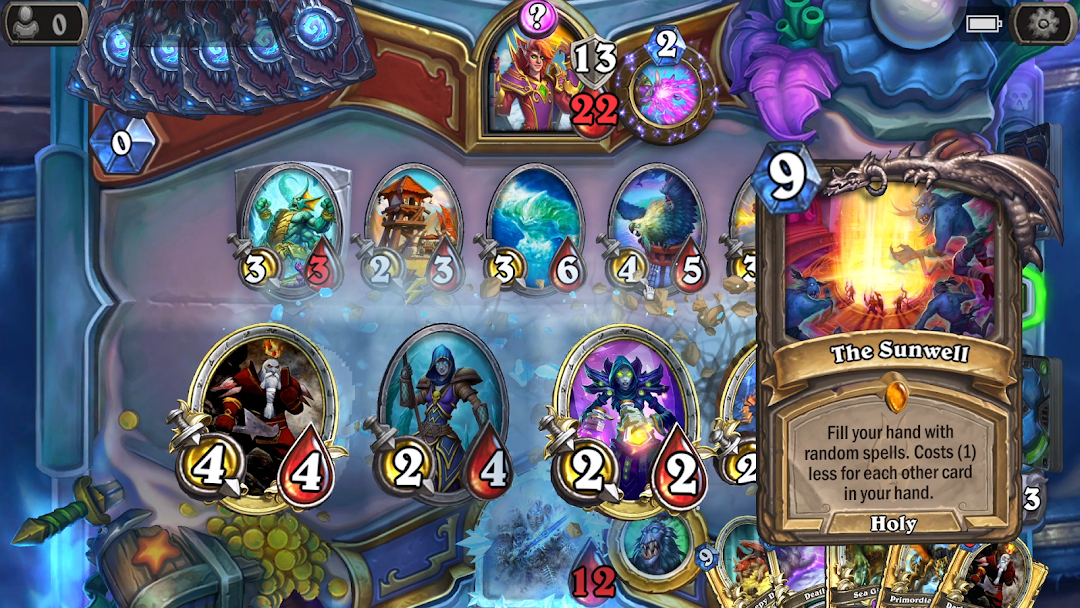
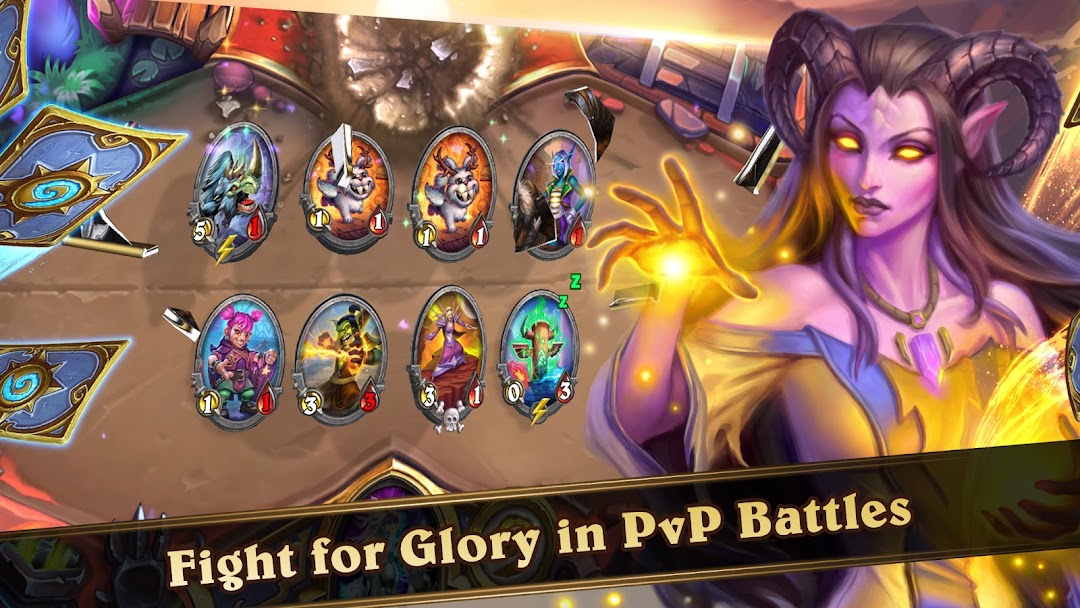
Hearthstone is a free-to-play digital collectible card game from Blizzard Entertainment, with version 35.4.241958 released in May 2026 for Android phones and tablets. Built on the Warcraft universe, it sets two players against each other in turn-based duels where you spend mana each turn to play minions, cast spells, and fire a class-specific Hero Power. The Android build carries the full game: every Standard and Wild card, the eight-player Battlegrounds auto-battler, Arena drafting, weekly Tavern Brawls, and the Mercenaries RPG mode. Your collection lives on your Battle.net account, so the same cards follow you between phone, tablet, and PC. Most matches run 5 to 15 minutes, which fits short mobile sessions.
- All 11 Hearthstone classes and what each Hero Power does
- The strongest decks in the current Standard meta and why they climb
- How Battlegrounds works, the auto-battler that runs beside the card game
- Arena, Tavern Brawl, Mercenaries, Wild, and Twist explained
- How gold, Arcane Dust, and card packs actually work
- Version 35.4.241958: Restoration of Azeroth and the first-ever Class Sets
- Hearthstone MOD APK features
- Frequently asked questions
All 11 Hearthstone classes and what each Hero Power does
Every class in Hearthstone is defined less by its cards than by its Hero Power, the button you can press for 2 mana on any turn (1 mana for Demon Hunter). Choosing a class decides the engine you build around, so this is the first thing new players need to understand before touching deck-building.
The 11 classes split into aggressive, value, and control identities:
- Hunter (Steady Shot): deals 2 damage straight to the enemy hero, the only purely aggressive Hero Power in the game, which pushes Hunter toward fast face decks.
- Mage (Fireblast): deals 1 damage to any target, flexible enough to ping a 1-health minion or chip the enemy face, the backbone of spell and burn builds.
- Paladin (Reinforce): summons a 1/1 Silver Hand Recruit, feeding wide board strategies that buff many small minions at once.
- Priest (Lesser Heal): restores 2 health, the slowest Hero Power, which steers Priest into long control games.
- Rogue (Dagger Mastery): equips a 1/2 dagger, rewarding tempo and combo decks that want cheap weapon damage.
- Shaman (Totemic Call): summons one of four random basic totems, ranging from a 0/2 Taunt to a spell-power booster.
- Warlock (Life Tap): draws a card and costs 2 health, the strongest card-advantage engine in the game and the reason Warlock rarely runs out of resources.
- Warrior (Armor Up): gains 2 armor, stacking a defensive cushion that suits control and big-health archetypes.
- Druid (Shapeshift): gives the hero +1 attack this turn and +1 armor, doubling as both removal and defense.
- Demon Hunter (Demon Claws): the cheapest Hero Power at 1 mana for +1 attack this turn, built for relentless early aggression.
- Death Knight (Ghoul Charge): summons a 1/1 Ghoul with Charge that dies at end of turn, and the class layers a Blood, Frost, and Unholy Rune system that decides which cards a deck can run.
Death Knight is the newest class and the only one with the Rune restriction, so a triple-Frost deck cannot include a triple-Unholy card. That single mechanic gives the class more deck-building variety than any other, which is a point most beginner guides skip over entirely.
The strongest decks in the current Standard meta and why they climb
In late May 2026, the ladder is dominated by a handful of archetypes rather than a single broken class, with Druid and Death Knight posting the highest aggregate win rates across recent rotation data. The deck you pick matters far more than your card count, because the top builds resolve games in predictable, repeatable ways.
These archetypes are the ones consistently hitting Top 500 Legend runs:
- Azshara Druid: ramps mana quickly to drop oversized minions ahead of curve, then closes with burst from spell payoffs, ideal against slower control decks.
- Herald Rogue and Herald Shaman: two of the most-played builds in the format, leaning on the Herald package for repeatable value and board pressure.
- No Hand Hunter: empties its hand fast to enable payoff cards that reward an empty hand, a pure tempo race that punishes slow openers.
- No Minion Demon Hunter: runs almost no minions, winning through spell damage and weapon attacks instead, which sidesteps most board clears.
- Burn Mage: ignores the board entirely and aims direct damage at the enemy hero, a clock that forces opponents to win before turn 8 or 9.
- Corpse Death Knight: uses Deathrattle and Corpse generation to out-value control mirrors over a long game.
- Aura Paladin and Dragon Warrior: board-centric decks that grow every minion at once or curve out clean with dragons, both vulnerable to a well-timed board clear.
The practical takeaway for ladder climbing: aggressive tempo decks (No Hand Hunter, Burn Mage) close games fast and reward tight play, while value decks (Corpse Death Knight, Control Priest) trade early and win the long grind. Picking a deck that matches your patience level beats copying whatever sits at the top of a tier list.
How Battlegrounds works, the auto-battler that runs beside the card game
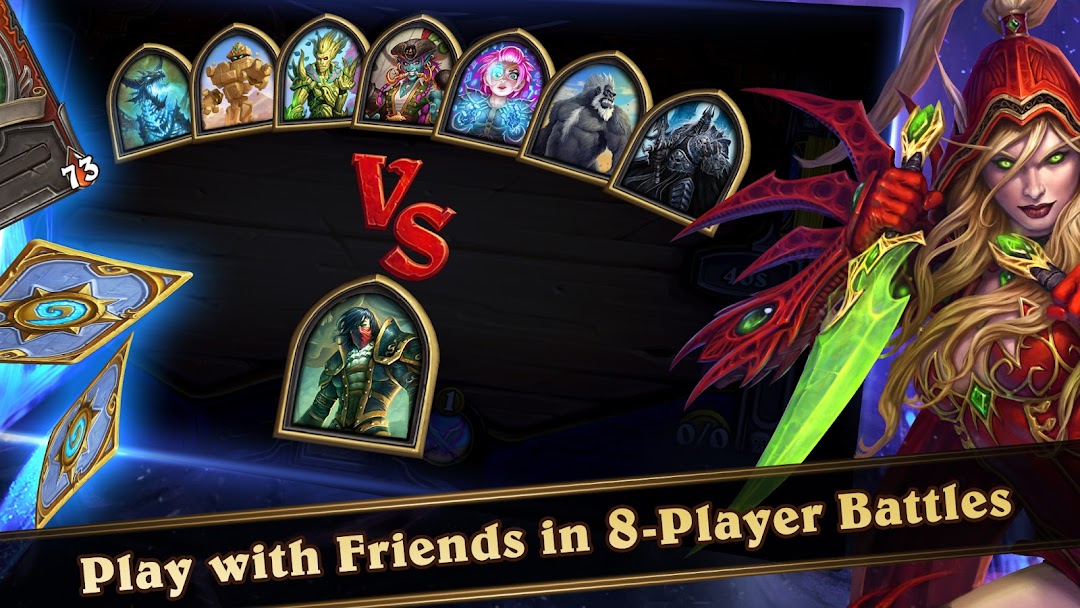
Battlegrounds is the mode most veterans recommend to newcomers, because it needs zero card collection and puts all eight players on equal footing from turn one. It is Blizzard’s take on the auto-battler genre, and it plays nothing like the standard card game.
Each match drops eight players into a shared lobby. You pick a Hero with a unique power, then spend Coins in a tavern to buy minions, with every minion costing 3 Coins regardless of strength. Minion power is set by its Tavern Tier from 1 to 6, and you spend Coins to upgrade your tavern and unlock stronger tiers over the rounds. Between shopping phases you are paired against one other player at random, and your minions fight automatically while you watch, so positioning and synergy decide the result rather than reflexes. Lose a fight and you take damage equal to the surviving enemy minions plus their Tavern Tier. The last hero standing wins.
The current run is Battlegrounds Season 13: CATACLYSM CALLS, which added the Trinket mechanic, two new keywords, and two new heroes to the pool. Because Battlegrounds is balanced separately from Standard, the regular monthly card patches barely touch it, and it draws roughly the same player numbers as the main ranked mode.
Arena, Tavern Brawl, Mercenaries, Wild, and Twist explained
Beyond Standard and Battlegrounds, Hearthstone runs several modes that change the rules entirely, and most players bounce between three or four of them. Knowing what each one demands saves you from wasting entry currency on the wrong format.
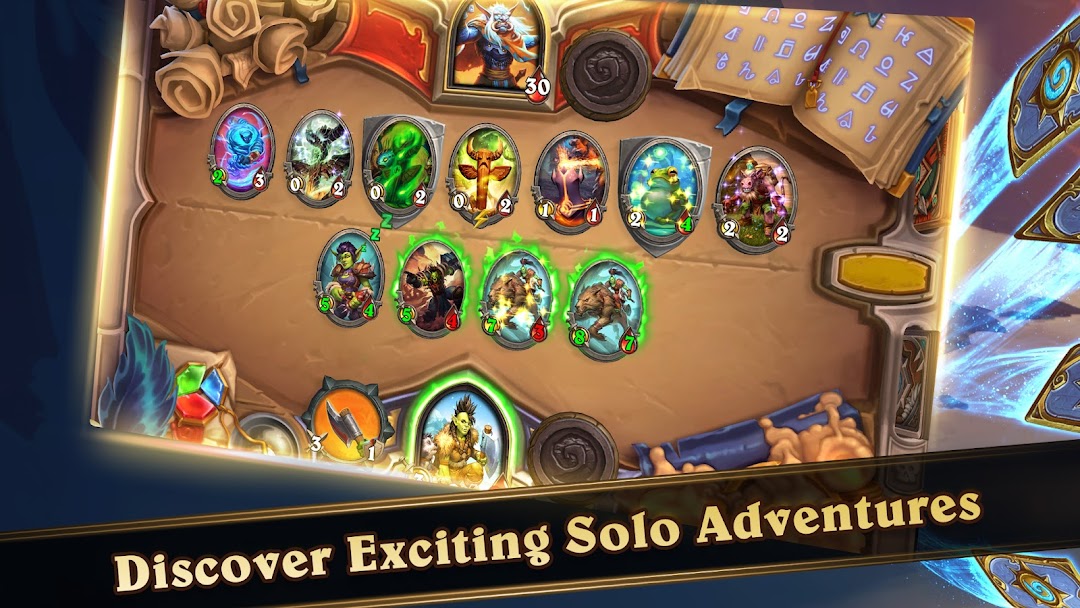
Arena is the drafting mode: you build a 30-card deck by picking one card from three choices, thirty times in a row, then play that deck until you hit 3 losses or 12 wins, earning rewards scaled to your record. The current Arena season runs a Dual Class format, where you choose two classes during the draft and pull cards from both. Tavern Brawl is a weekly challenge with rotating, often silly rules, and the first win each week hands you a free card pack. Mercenaries is a PvE-leaning RPG mode with its own collection of characters split into Casters, Fighters, and Protectors, where you level mercs through bounties and turn-based combat instead of playing cards. Wild is the no-rotation format where every card ever printed is legal, which leads to far faster and more explosive combos than Standard allows. Twist is a rotating ruleset format that changes its card pool and restrictions on a season-by-season basis. Solo Adventures rounds things out with scripted single-player encounters against AI bosses.
How gold, Arcane Dust, and card packs actually work
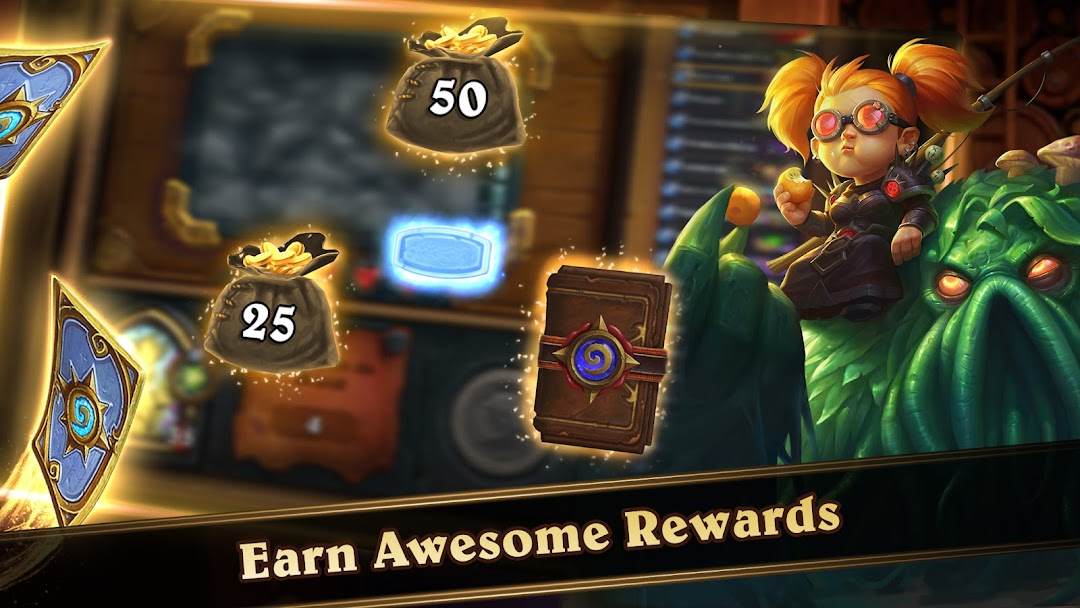
The most-searched money question about Hearthstone has a precise answer: a card pack costs 100 gold or about one US dollar, and gold comes mainly from daily and weekly quests worth roughly 50 to 60 gold each plus 10 gold for every three wins. Understanding the dust system is what separates players who waste packs from players who build the exact deck they want.
Cards come in four craftable rarities, and you spend Arcane Dust to craft the specific card you need rather than gambling on packs. The crafting costs are fixed:
- Common (40 dust): disenchants back for only 5, so dusting commons is almost always a loss.
- Rare (100 dust): disenchants for 20, and you pull at least one rare or better from every pack.
- Epic (400 dust): disenchants for 100, appearing roughly once every five packs.
- Legendary (1600 dust): disenchants for 400, the priciest craft and the cards that usually define a deck.
To put the grind in perspective, opening 100 packs from an expansion nets about 75% of that set, and a 40-pack bundle (around 50 dollars) converts to roughly 3,600 dust after disenchanting duplicates, enough for two legendary cards. Golden cards cost several times more, topping out at 3,200 dust for a golden legendary. This is the resource wall that the MOD version targets, covered next.
Version 35.4.241958: Restoration of Azeroth and the first-ever Class Sets
Version 35.4.241958, which rolled out on May 19, 2026, follows the major 35.4 update that launched the Restoration of Azeroth content and introduced Class Sets to Hearthstone for the first time. The headline changes are:
- Class Sets debut: patch 35.4 added the first-ever Class Sets in Restoration of Azeroth, where four classes step up to heal the damage left behind by Deathwing, each with its own set of cards and archetypes.
- Class Set buffs in 35.4.241958: Blizzard acknowledged the new archetypes launched too weak and buffed three cards in Mage’s Leyline package to make it competitive.
- Hunter Animal Companion boost: Migrating Elekk was reworked to give the popular Animal Companion archetype the strong two-drop it was missing.
- Dual Class Arena season: 35.4 brought back Dual Class Arena with a curated card pool, displaying both chosen classes under your name during matches.
- Battlegrounds tuning: 35.4.241958 shipped alongside minion, spell, and Trinket adjustments across the CATACLYSM Battlegrounds season.
A developer update video covering these balance changes, Class Sets, and the Arena season was scheduled for May 21, 2026 on the official YouTube channel.
Hearthstone MOD APK features
This MOD targets the single biggest barrier in Hearthstone, the resource grind, by removing the gold and Arcane Dust costs that gate the card collection. It is aimed at players who want to build any deck and explore every mode without spending months on daily quests or real money on packs.
Unlimited Gold
Gold stays effectively unlimited instead of trickling in at roughly 50 to 60 gold per daily quest and 10 gold per three wins. Since one card pack costs 100 gold, the stock economy makes you grind two full quests for a single pack. With unlimited gold you can buy packs from any expansion in bulk, which matters most right after a set like Restoration of Azeroth drops and you want to chase new Class Set archetypes immediately rather than weeks later.
Unlimited Arcane Dust
Arcane Dust sits maxed out instead of forcing you to choose between crafting a single 1,600-dust legendary or four 400-dust epics. In the stock game a complete competitive deck often needs two or three legendaries plus several epics, which is 4,000 dust or more, equal to dozens of packs. Unlimited dust lets you craft the exact Azshara Druid or Burn Mage list off a tier list with no disenchanting, no duplicates, and no waiting for the next expansion’s free legendary.
Unlimited Card Packs
Packs open without the 100-gold price tag, which sidesteps the statistic that opening 100 packs gets you only about 75% of an expansion set in the stock version. This is most useful for collection completionists and for Wild players who need cards from old sets that no longer appear in any current reward track or free bundle.
All Cards Unlocked
The full card collection across every expansion is available from the start, including the golden versions that normally cost up to 3,200 dust each. Instead of disenchanting at a 25% loss (a legendary returns only 400 of the 1,600 dust it cost), you skip the crafting screen entirely and jump straight into deck-building for Standard, Wild, and Arena.
The table below lays out the core differences between the stock Hearthstone and the MOD build, so you can see exactly which resource walls the MOD removes before downloading.
| Criteria | Stock APK | MOD APK |
|---|---|---|
| Card pack cost | 100 gold or about $1 each | Free, unlimited packs |
| Daily quest gold | 50 to 60 gold per quest | Unlimited gold |
| Crafting a legendary | 1,600 Arcane Dust | Not needed, all cards unlocked |
| Crafting an epic | 400 Arcane Dust | Not needed, all cards unlocked |
| Completing an expansion set | About 100 packs for 75% of the set | Full collection from the start |
| Golden legendary card | 3,200 Arcane Dust | Unlocked |
| Disenchant return on a legendary | 400 of 1,600 dust (25%) | Irrelevant, nothing to disenchant |
Frequently asked questions
Is the Hearthstone MOD APK safe to install?
Treat any modified APK with caution and install it on a secondary device or a throwaway Battle.net account rather than your main one. Because the stock game stores your card collection server-side on Blizzard’s servers, a MOD that claims unlimited gold or dust works very differently from an offline single-player mod, and you should back up nothing valuable to the modded install.
Will the MOD get my account banned?
Hearthstone is an always-online game that validates your collection against Blizzard’s servers, so any modification touching gold, dust, or card ownership carries a real ban risk to the linked Battle.net account. Anti-ban features that some MOD builds advertise reduce detection but do not guarantee safety, which is why using a separate account is the standard advice.
Does Hearthstone work offline?
No. Every mode, including the single-player Solo Adventures and Battlegrounds, requires an internet connection because the game runs match logic and stores your collection on Blizzard’s servers. You need Wi-Fi or mobile data to log in, open packs, or play a single turn.
Is Hearthstone free to play without spending money?
Yes. You can build a full collection through quests, the rewards track, and Arena runs without spending a cent, though it takes time. Battlegrounds is the most free-friendly mode since it needs no card collection at all, putting all eight players on equal footing from the first turn.
How large is the Hearthstone download?
The base Android install runs over 3 GB once the full game and assets download, similar to other large Blizzard mobile titles. Make sure you have several gigabytes of free storage and a stable connection before installing, as the game pulls additional data on first launch.